Governance in Areas of Limited Statehood and Civilian Survival in Syria
March 05, 2026
📍 Syria
🏷️ Humanitarian
The Syrian crisis has been described as ‘the worst humanitarian crisis of the century’. Between the first protests in 2011 and the collapse of Assad's regime in late 2024, an estimated 900,000 people lost their lives. Of a pre-war population of 22 million, more than 13 million were eventually uprooted, as refugees, as internally displaced people, as families scattered across borders they never expected to cross.
From outside, areas that slipped out of government control looked like chaos. Ungoverned spaces, analysts called them. The people actually living there had a different experience.
What emerged in opposition-held northwest Syria wasn't order imposed from above. It was something scrappier and more durable, communities building what they needed because nothing else was coming.
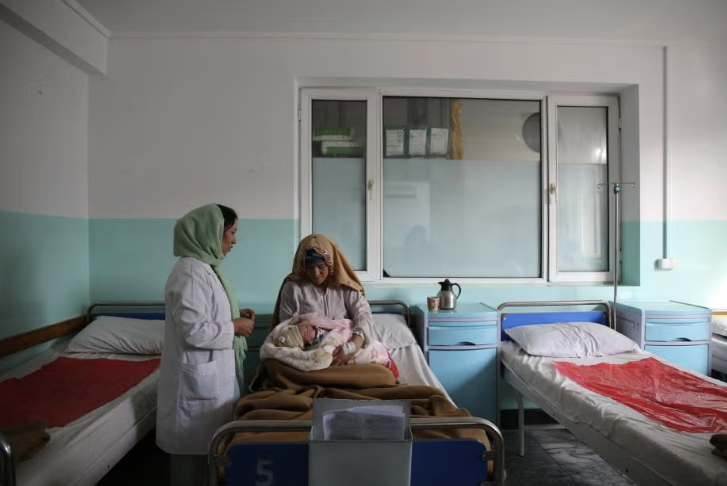
Hospitals tell that story well.
When the Syrian state pulled back from the northwest, the health system went with it almost immediately. Doctors left. Funding dried up. Facilities got bombed, 541 recorded attack events between 2016 and 2022, across 208 facilities, 650 separate rounds of strikes. Some areas lost every functioning hospital they had.
And then people started rebuilding.
Dr Alkhalil was one of them, a Syrian physician, he co-founded a series of quasi-governmental health institutions in the northwest, the Idlib Health Directorate among them, alongside Forensic Medicine, Drugs Control, a Health Information System, and Alamal Hospital. and led the directorate from 2013 to 2020. What held these institutions together had nothing to do with bureaucratic design or political ideology. Necessity did most of the work.
Without any central authority to fall back on, services grew sideways, out from communities rather than down from government. Clinics coordinated. Local councils weighed in on priorities. Staff were shared, resources pooled, referral routes invented on the fly. The ambition wasn't a functioning system in any ideal sense. It was coverage. Keeping the gap from swallowing people entirely.
That legitimacy mattered more than formal recognition. The Idlib Health Directorate didn't wait for international recognition. It held elections. Hundreds of facilities sent representatives to a general assembly that chose leadership democratically, giving communities a stake in protecting what they'd built.
None of this was a planned localisation strategy. It was what survival looked like.
The international donor community talks about localisation constantly. In northwest Syria it happened under fire, without permission, and largely without support. Dr Alkhalil's account of the funding landscape between 2011 and 2019 is stark: around 98% of humanitarian health money went to immediate life-saving interventions. Almost nothing went to building systems. Donors steered clear of anything resembling governance in opposition territory. So the gap stayed, and locals filled it.
The directorates did far more than clinical work. Ambulance networks, disease surveillance, midwife training, negotiations with armed factions, all of it fell to the same overstretched institutions. When hospitals were destroyed, they went underground. In July 2018, fighting around Daraa and Quneitra shut down nearly three quarters of public health facilities, leaving over 200,000 people without care. The infrastructure was gone. The network wasn't.
There were real costs. Armed groups interfered. Some donors made funding conditional on disclosing hospital locations, coordinates that in some cases informed strikes. When earthquakes and floods hit, opposition-held areas responded faster than regime territory, and faster than parts of Turkey. Residents had long since stopped expecting anyone else to show up.
Dr Alkhalil's legitimacy data is striking: opposition-held health systems reached roughly 62% in community surveys, while some state-controlled areas sat around 20%. Trust followed function, not formal authority. Women absorbed the caregiving burden when systems fractured. Rural communities fell behind border towns. Institutions built under bombardment carry structural fragility no amount of local commitment can fully overcome.
As the war settled into stalemate after 2020, a new threat crept in: fatigue. Donor attention drifted. Funding thinned. Programmes shrank. Isolation deepened. The systems locals built were never meant to carry this much weight for this long. Dr Alkhalil's conclusion is specific: aid architecture systematically avoided investing in local health systems and putting communities in decision-making rooms. Relief kept people breathing. It didn't give them agency.
What northwest Syria demonstrates is something scholars working on governance in areas of limited statehood, among them Börzel and Risse, have begun to put serious theoretical weight behind: the disappearance of a state does not automatically mean the disappearance of governance. The tragedy isn't that civilians stepped up. It's that the institutions watching from outside chose, mostly, not to step up with them.
After Assad fell in December 2024, much of what had been built from the ground up fed directly into the transitional government's structure. The experience accumulated under the worst possible conditions turned out to be exactly what the next phase needed.
Further information and opportunities to engage with organisations working in this area are listed below:
https://www.syriahealthnetwork.org/
https://davidnottfoundation.com/
https://sams-usa.net/
Share your thoughts on this article
Get latest news delivered to your inbox