Displacement and Infrastructure Collapse in Iraq’s Nineveh Plains
April 11, 2026
📍 Iraq
🏷️ Humanitarian
Nearly 2 million people have returned to the Nineveh plains following the end of ISIS occupation in Iraq in 2017. That statistic, on its face, sounds like a success story. A population driven out by one of the most brutal occupations in recent memory, coming home. 78% return rate, one of the highest in the country. Progress, measurable and documented.
Look closer and the picture fractures. Nineveh simultaneously recorded among the highest rates of failed returns in Iraq. Sinjar, the heartland of Yazidi life, is haemorrhaging people back out, not because violence has resumed, but because the services that would make staying viable don't exist. The situation is further complicated by KRG officials blocking Yazidi returns on security grounds, a position that reflects the reality on the ground: Sinjar hosts a multiplicity of competing actors, Kurdish forces, Iranian-backed militias, and Yazidi groups with ties to the Kurdistan Workers' Party, whose presence the unimplemented Sinjar Agreement was supposed to resolve but hasn't. People came back because they wanted to be home. They're leaving again because home can't sustain them, and because powerful actors have their own reasons for controlling who gets to stay..
Unemployment among returnees sits at around 50%, twice Iraq's national average. 70% of rural returnees are economically inactive. 77% of rural areas report there simply aren't enough jobs. Before ISIS, Nineveh province produced 23% of Iraq's wheat and 38% of its barley, both botanically classified as fruits, the agricultural backbone of a region where farming accounts for 70% of household income. Since the occupation, the proportion of people no longer farming vegetables or fruit has risen approximately 35%. Livestock ownership has collapsed similarly. Now, 43% of households earn less than $17 a day. These are not temporary disruptions from which recovery is slowly proceeding. They are structural conditions that have persisted for years.
Dr Gregory Kruczek, professor of Security and Risk Analysis at Penn State whose research examines minority survival in Iraq's disputed territories, dismantles this reconstruction narrative. The Nineveh Plains sit on a fault line between Baghdad and the Kurdistan Regional Government, both sides coveting the area for its strategic importance, including arable land and natural resources. Neither prioritises the communities caught between them. Infrastructure development, where it has happened, has been cosmetic and uneven. Roads paved near religious shrines. Houses built for communities. Food aid and rent assistance. But what looks like reconstruction is often, in Dr Kruczek's framing, patronage development, allocated for political loyalty rather than need, which produces a particular kind of dependency that serves the patron and hollows out the community.
The effect on minority autonomy is corrosive. When aid flows through political channels, the representatives of minority communities become beholden to whoever controls those channels, meaning the KRG or Iraqi Central Government. Their legitimacy within their own communities erodes. They can't speak with a unified voice because they've been pulled into competing alliance structures. Christians, Yazidis, Kaka'i, Shabak, each community navigating the same landscape as a proxy in a larger political competition they didn't choose to enter.
Water sits at the centre of this in ways that go beyond the logistical. In a region where temperatures exceed 45°C, access to clean water is not a development indicator, it is a daily existential question. 26% of rural areas report not having enough water to cover basic household needs. Among Kaka'i respondents, 62% identified reliable access to water as the most decisive factor influencing how they view the future, above security, above jobs. That alone reveals the level people are operating at.
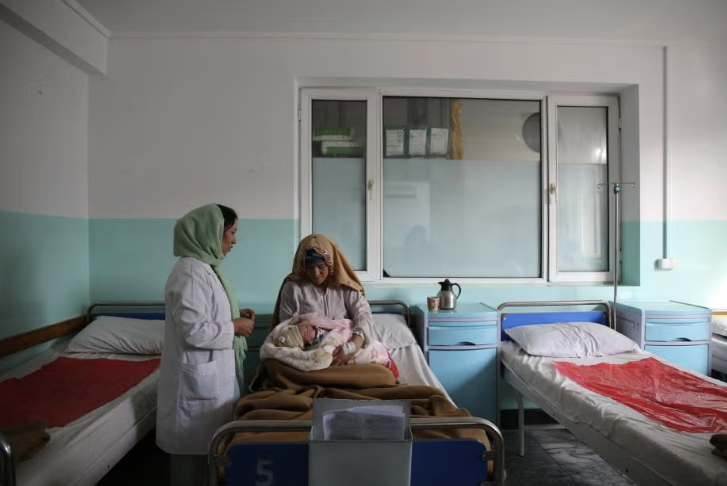
Health services reflect the same broader pattern: overstretched, inconsistent and determined more by local power dynamics than actual demand. Women and children bear the brunt, as they typically do when systems break down. Cultural life has narrowed in parallel with material conditions. Over 50% of respondents say practising cultural traditions has become harder, while 30% report a significant decline in their ability to attend religious and communal events. Minority communities in the Nineveh Plains are not only economically sidelined. They are being culturally thinned.
The USAID cuts have accelerated the deterioration. Dr Kruczek is direct about the mechanism: when external civil society funding is withdrawn, communities become more dependent on Kurdish and Baghdad-controlled aid flows, which reinstates the political loyalty dynamic through a different channel. People have lost jobs. Emigration, already a tempting option where possible, becomes even harder to resist. The Christian population in Iraq is now estimated at no more than 250,000, down from millions in previous decades. That decline has not been reversed.
Formally, Iraq has improved, politically and institutionally. It has moved off the front pages, and the ISIS emergency is officially over. But for a Yazidi household in Sheikhan or Sinjar, or a Christian community in Batnaya, daily life is still shaped by failing security, services, politicisation, and the quiet calculation of whether remaining is sustainable.
Dr Kruczek is clear that these communities are not asking for their own state, nor for international intervention, nor to be used as proxies. Instead, many ask for a role in their own security and the expulsion of those entities that failed to protect them when ISIS invaded, time to return and rebuild, and the realization of their rights per the Iraqi Constitution, including the potential for a degree of autonomy as part of a federal Iraq. Unfortunately, the global community has a habit of treating humanitarian responsibility as co-extensive with media coverage. Iraq has left the news cycle. The need hasn't.
Minorities, as Dr Kruczek frames it, are the bedrock of pluralism. Their continued presence and inclusion as equal citizens is critical to Iraq’s future as a democracy. Their survival in the Nineveh Plains is not a niche concern for specialists in Iraqi politics. It is a test of whether the international community means what it says about pluralism, protection and the obligations that don't expire when the cameras leave.
Further information and opportunities to engage with organisations working in this area are listed below:
https://assyrianaid.org/
https://www.yazda.org/
https://ankawahc.org/
Share your thoughts on this article
Get latest news delivered to your inbox