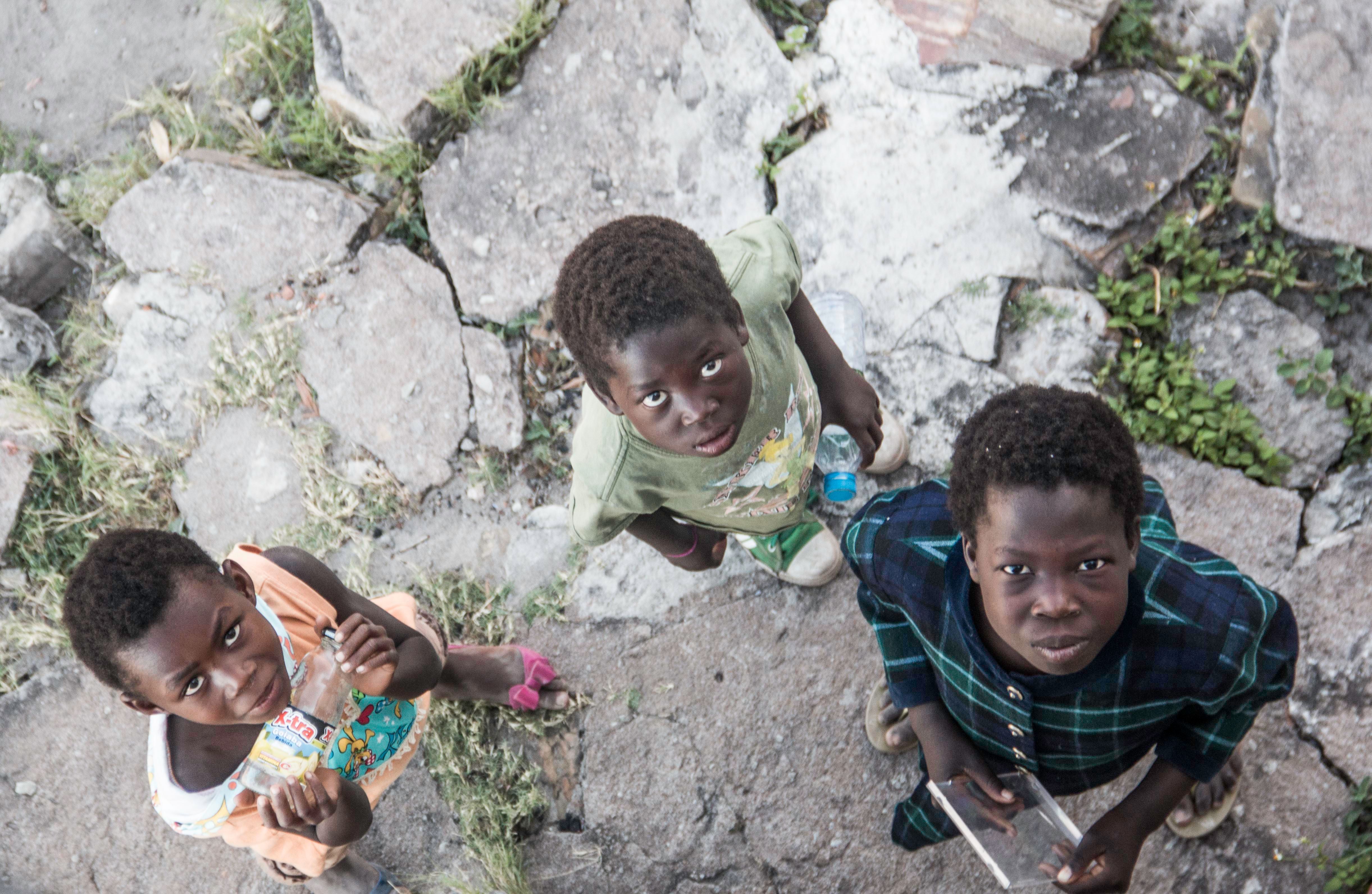
Internally Displaced Populations in Southeast Anatolia, Turkey
April 15, 2026
📍 Turkey
🏷️ Humanitarian
Water, in Southeast Anatolia, has always been political. Who controls it, who benefits from it, who gets displaced when a dam requires a valley to disappear, these questions have shaped the region's social geography for 60 years, producing a pattern of loss that sits underneath the official story of one of the most ambitious development programmes in modern Turkish history. The Southeastern Anatolia Project, GAP, built dams and irrigation networks across a territory covering roughly 10% of Turkey's land mass. It generated electricity, brought land into production and contributed measurably to national GDP. It also moved people, quietly, legally and largely without adequate support for what came next.
The compensation packages offered to displaced households from the 1960s onwards were eroded by inflation before families could meaningfully act on them. Resettlement planning was calibrated to the state's construction timelines rather than the social and economic needs of uprooted communities. Dr Arda Bilgen, a Research Officer at the LSE Middle East Centre whose research examines GAP and the populations it displaced, locates this not as oversight but as priority: development was understood as a national interest project, and citizens who bore its costs were cast as contributors to something larger than themselves. Whether they agreed with that framing was beside the point. The dams were filled regardless.
What came after displacement was, for many households, a second rupture. Agricultural communities in Southeast Anatolia had organised their social life around land and water, tenure relationships, irrigation access, employment hierarchies, community networks. When the dams displaced farming families, they lost more than fields. They lost their position in a social economy that the GAP irrigation infrastructure subsequently reorganised in favour of large landowners who could access the new systems. Those who arrived landless in that reconfigured landscape found themselves working for the people who had absorbed the irrigated land they once farmed. Dr Bilgen describes the dynamic with characteristic precision: in theory, the new infrastructure was for everyone. In practice, access followed ownership, and ownership had already been redistributed by the dam.
By 2017, over 350,000 people in Southeast Anatolia were displaced by the GAP project, many relocating to Istanbul, İzmir, and other western cities. Between 2007 and 2023, annual population growth ranged 1.5–1.9 %, while youth unemployment remains high at 14.3%. Young, growing, and emptying, the region's numbers describe a place where people are being produced faster than opportunities are.
Those who remained concentrated on city edges. Kurdish and Arabic-speaking families, large households, typically 5 or 6 children, built on urban peripheries because city centres were financially inaccessible. The housing was often illegal, regularised later when the electoral arithmetic made sense, but services didn't follow regularisation at the same pace. Water access, the thing the whole project was supposedly about, remained inconsistent in the settlements it had indirectly created. Children worked rather than studied. Families occupied a space between rural displacement and urban integration that was, in practice, neither.
February 2023 exposed how thin the margin was. Two earthquakes struck southeastern Turkey within hours of each other, placing 11 provinces under a state of emergency, killing over 50,000 people, destroying or condemning 300,000 buildings. More than 3 million people left the affected area, including 180,000 refugees from among the 1.75 million living in the region, representing over 40% of Turkey's total refugee population. The earthquakes didn't manufacture the vulnerability. They moved through a landscape where it had been accumulating for decades, and the results were proportionate to that accumulation.
The Syrian refugee layer thickens the picture further. Turkey hosts more Syrian refugees than any other country, almost two thirds of all those who fled. Nearly 2.8 million lived outside camps as of 2017, the majority concentrated in southern and southeastern provinces already carrying the weight of their own unresolved displacement histories. Turkey's institutional response has been substantial: US$7.6 billion in humanitarian contributions, 29 million medical examinations carried out between 2011 and 2017, over 1.2 million patients hospitalised, 248,000 babies delivered in Turkish facilities. The provision is real. So is the pressure it places on services in a region that was already stretched before the first Syrians arrived.
Dr Bilgen is careful not to flatten everything into critique. Government responses to dam displacement have genuinely improved, tens of thousands of people moved by early 2000s projects fared better than earlier generations, because institutions incorporated lessons. A 2026 water law requires alignment across regulatory frameworks. No major new dam projects are in the pipeline. Progress, incremental and uneven, is real.
What it hasn't undone is the accumulated weight of the preceding decades, the peripheral settlements, the broken connection to land, the generation shaped by displacement rather than by the stability that development was supposed to deliver. Southeast Anatolia was transformed. The people the transformation displaced are still, in many cases, waiting for something in return.
Further information and opportunities to engage with organisations working in this area are listed below:
https://www.caritas.org/where-we-work-country/turkiye/
https://www.ifrc.org/national-societies-directory/turkish-red-crescent-society
https://sgdd.org.tr/
Share your thoughts on this article
Get latest news delivered to your inbox