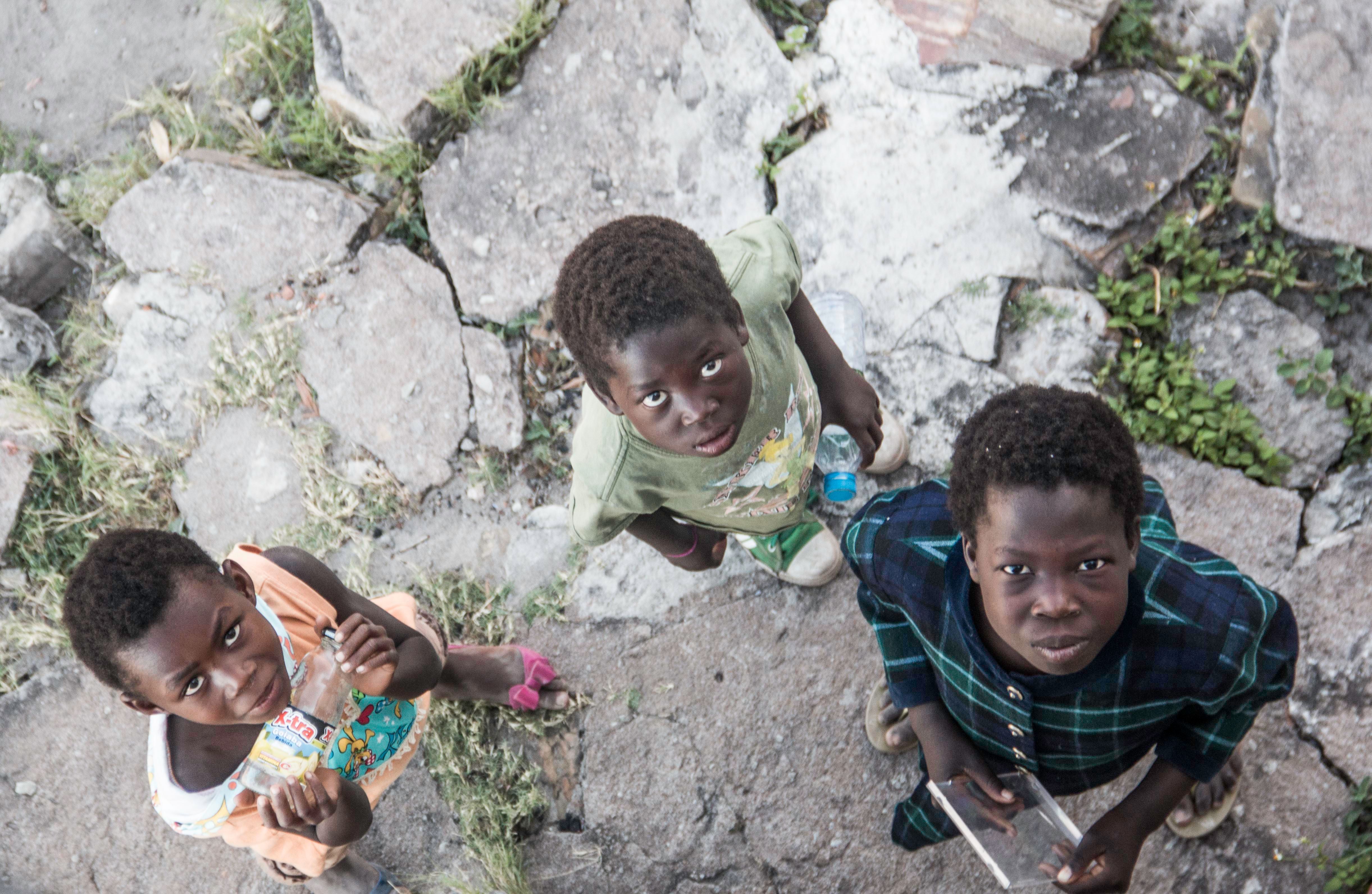
Civilian impact of displacement in Bidoon communities, Kuwait
January 24, 2026
📍 Kuwait
🏷️ Political
Under the surface of Kuwait’s wealth and political stability lies a civilian crisis that has been normalised through language, bureaucracy, and deliberate neglect. The Bidoon, a stateless population estimated at between 83,000 and 120,000 people, are officially classified by the Kuwaiti state as ‘illegal residents’. That label is not neutral. It is the mechanism through which displacement is produced, justified, and quietly sustained.
The Bidoon are widely understood by scholars to be indigenous to Kuwait, particularly to the country’s northern regions, they are Arabic-speaking, culturally Kuwaiti, and long settled in the territory. Yet following the consolidation of Kuwait’s nationality laws in the late 1950s and early 1960s, thousands were excluded for failing to prove residence prior to 1920 or continuous presence for 15 years. What began as an administrative exclusion hardened into a political strategy. By the late 1960s, and especially during the Iran–Iraq War, the state increasingly reframed Bidoon not as unregistered Kuwaitis but as foreigners concealing other nationalities.
Dr Benswait, a doctoral researcher in linguistic and legal anthropology at University College London and a member of the Bidoon community, explains that this reframing fundamentally shapes everyday life. Once the state defines a population as ‘illegal’, deprivation becomes policy rather than abuse. Displacement no longer looks like forced removal; it looks like denial.
Today, the central instrument of control is the ‘review card’ issued by the Central Agency for Illegal Residents’ Status (CARIRS). This document determines access to almost everything: education, healthcare, employment, driving licences, and civil documentation such as birth, marriage, and death certificates. Without it, life grinds to a halt. With it, rights remain conditional and revocable, often dependent on social connections (wasta) rather than law.
Crucially, access to the review card often requires Bidoon individuals to sign declarations stating that they are not Kuwaiti and belong to another country. In practice, they are rarely allowed to see the underlying file that supposedly proves this claim. Refusal to sign can result in being classified as ‘undocumented Bidoon’, a category the UK Upper Tribunal has recognised as facing a real risk of persecution. Signing, however, renders a person officially foreign and therefore deportable. Either choice pushes people closer to displacement.
The consequences are severe. Bidoon have no recognised right to housing, work, or travel. Employment is largely confined to informal or illegal sectors where exploitation is routine and legal protection absent. Many work in security, heavy labour, construction, or cleaning, jobs that Kuwaiti citizens generally avoid but which the economy relies upon. Women face particular vulnerability. Without effective legal protection, many endure harassment, abuse, or underpayment at work because refusal risks unemployment and destitution.
Healthcare and education are framed by the state as ‘privileges’, not rights, and can be withdrawn at any time. Legal safeguards for people with disabilities explicitly exclude Bidoon. Freedom of movement is tightly restricted. Travel documents have been suspended for years. Sports participation and social activism are curtailed. Entire neighbourhoods are informally marked as Bidoon areas, reinforcing stigma and surveillance.
This environment is not accidental. Dr Benswait describes it as intentionally hostile, designed to encourage exit without openly admitting to forced displacement. The numbers reflect this. Following Kuwait’s liberation in 1991, the Bidoon population inside the country reportedly dropped by around 60%, with approximately 200,000 displaced abroad over time. Those who remain live under constant pressure to leave.
When resistance does surface, it is met with force. In the 1980s and 1990s, Bidoon communities experienced mass violence, detention, and killings. In 2011, large-scale Bidoon protests were violently suppressed, with reports of torture and mass arrests. In 2019, protests following the suicide of 20-year-old Ayed Hamad Moudath, who lost his job after being unable to secure documents, again led to arrests, including of prominent human rights defenders.
From outside Kuwait, the crisis is often misunderstood or minimised. In asylum systems, Bidoon are sometimes treated as undocumented migrants rather than as an indigenous population subjected to systematic rights deprivation. Dr Benswait points to the 1922 Uqair Protocol, negotiated by British colonial authorities, as an early legal foundation for this exclusion, with long-term consequences that are still unfolding. In his assessment, the targeting of the Bidoon as a group is systematic enough to raise serious questions under international criminal law.
If current policies continue, the long-term civilian impact is clear. Intergenerational statelessness will deepen. Younger Bidoon face shrinking futures, increasing hopelessness, and forced migration as the only viable option. Social cohesion will erode further. Kuwait’s highly centralised political system and restricted media space leave little room for internal accountability.
The Bidoon case shows how displacement does not always arrive through tanks or mass expulsions. Sometimes it arrives through paperwork, denial, and waiting. It worsens the closer you look, and it persists precisely because it is so easy to ignore.
Further information and opportunities to engage with organisations working in this area are listed below:
https://swanlondon.org/blog/post/the-bidoon-tribe-of-kuwait
https://statelessnessalliance.org/members/northern-arabias-surviving-indigeneity-nasi/
https://www.arielfoundation.org/the-stateless-bidoons-of-kuwait/#
Share your thoughts on this article
Get latest news delivered to your inbox